Showing posts with label waterlily. Show all posts

Friday, January 29, 2010

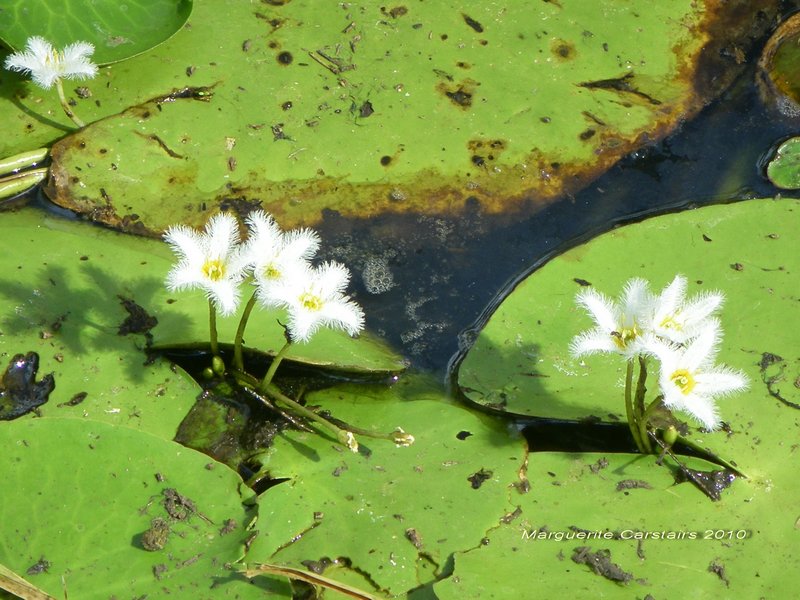
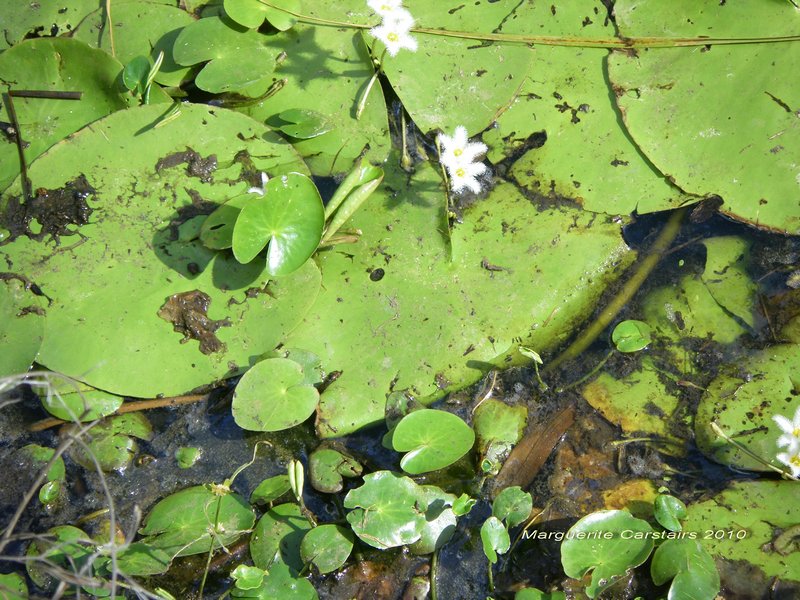
Water Violets..Hottonia Palustris


white waterflowers, originally uploaded by Ladymaggic.
In the centre of the waterlily leaf was this little white flower.
It looked like a waterlily in the way it came up, and it may have been a miniature waterlily...same growth pattern...

Hottonia palustris (Water Violet)
An old-fashion water garden plant that is commonly seen in European water gardens. Green submerged or emerged deeply divided leaves. Attractive small pale violet to white emergent flowers during the warmer months. Simply beautiful. Rare.
http://www.watergardenparadise.com.au/deepwaterplants.php


Waterlily cream..Nymphaeaceae


Waterlily cream, originally uploaded by Ladymaggic.
Nymphaeaceae (pronounced /ˌnɪmfiːˈeɪsiːʔiː/) is a name for a family of flowering plants. Members of this family are commonly called water lilies and live in freshwater areas in temperate and tropical climates around the world. The family contains 8 genera.

There are about 70 species of water lilies around the world. The genus Nymphaea contains about 35 species .

Water lilies are rooted in soil in bodies of water, with leaves and flowers floating on the water surface. The leaves are round, with a radial notch in Nymphaea and Nuphar, but fully circular in Victoria.

Water lilies are divided into two main categories: hardy and tropical. Hardy water lilies bloom only during the day, but tropical water lilies can bloom either during the day or at night, and are the only group to contain blue-flowered plants.

Water lilies can be fragrant, such as Nymphaea odorata.
http://en.wikipedia.org/wiki/Nymphaeaceae

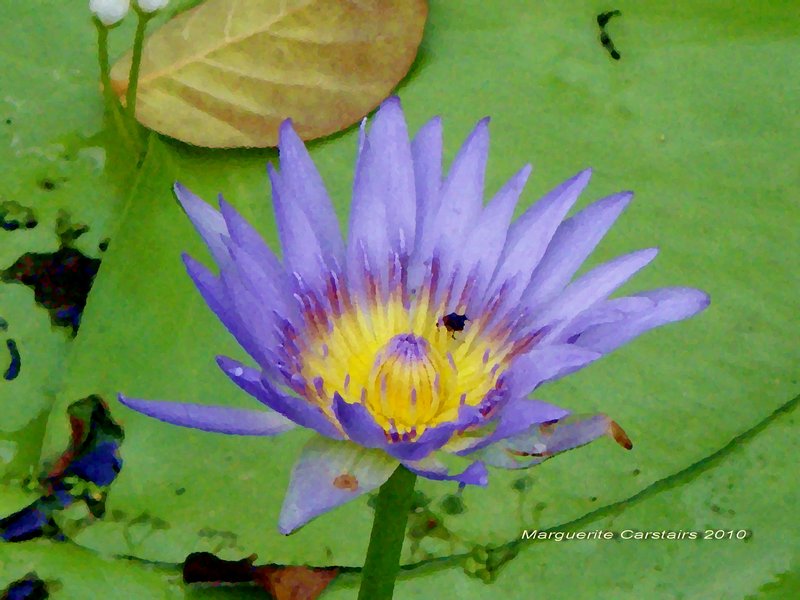
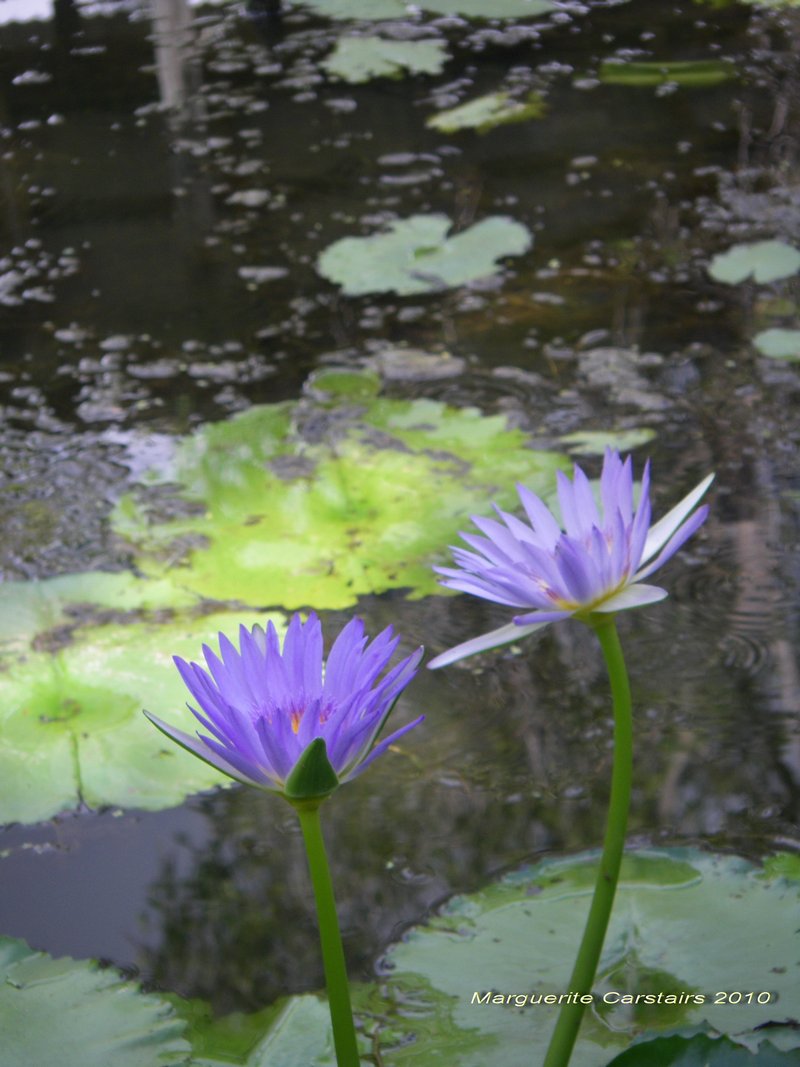
Waterlily and Leaf...Nymphaea Caerulea


Waterlily, originally uploaded by Ladymaggic.
Nymphaea Water Lily...a purple waterlily

Nymphaea caerulea has a long history of use, dating back thousands of years. A current use for the dried flowers is to soak a few in red wine overnight, strain and drink in moderation. The effects produced are evidently relaxing, sedating and produce a feeling of contentment. The flowers are also used in smoking blends or smoked alone.

The word Nymphaea is from a Greek word nymphaia meaning water nymph. Both the rhizomes and seeds can be eaten. Now a naturalised water plant in NSW and QLD, N. caerulea (also known as N. caerulea ssp. zanzibarensis) has replaced the native Nymphaea gigantea which is now considered locally extinct in SE Qld due to sedimentation and increased disturbance in waterways. It still occurs in tropical parts of Australia.
 
Care and cultivation Seed can be sown in spring and during summer (September-January). Finely sieved clean loam soil without any organic matter or fertiliser is best. Seed should be sown thinly, covered lightly with soil and then plunged into shallow water, no deeper than 2.5 cm, and placed in a sunny position. Germination should take 3-4 weeks The seedlings will look like fine grass at first, developing true leaves later. When the first two or three floating leaves appear the seedling should be pricked out and planted into individual containers and immersed back in the water. They may be submerged into deeper water and larger containers as they grow and lengthen. (taken from www.plantzafrica.com).

http://www.herbalistics.com.au/shop/product_info.php?products_id=228


Networked Blogs

Followers