Showing posts with label Ladymaggic. Show all posts

Sunday, September 27, 2009

Shoreline at the Beach


Shore, originally uploaded by Ladymaggic.
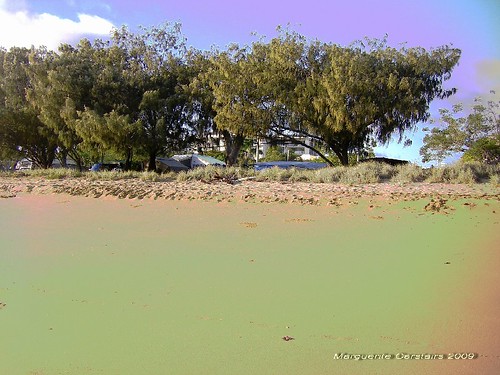
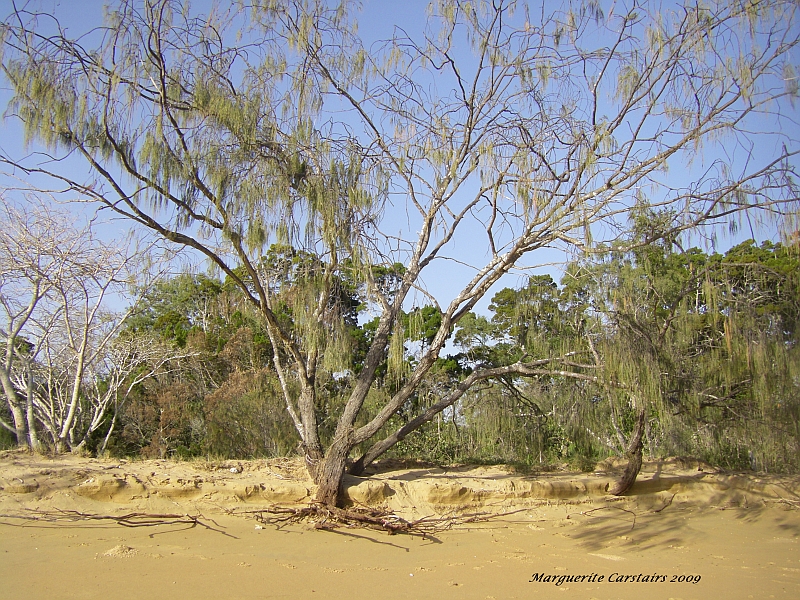
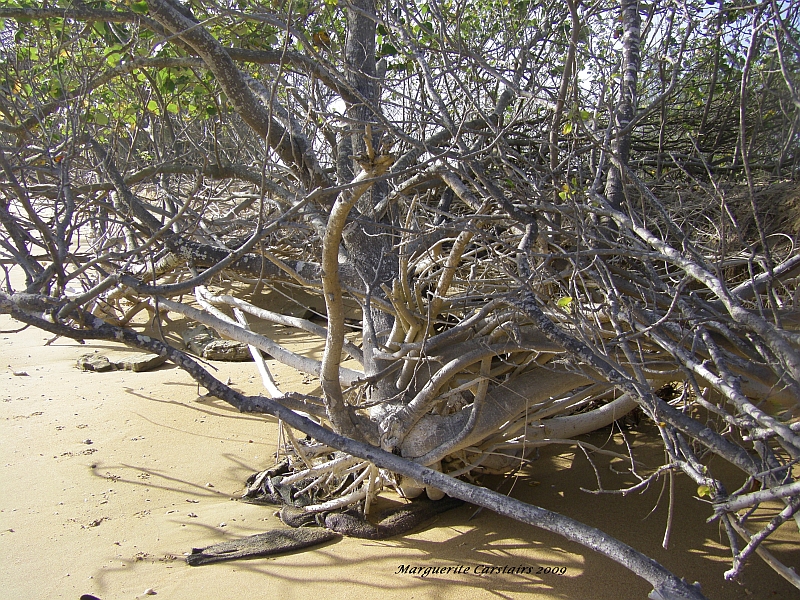
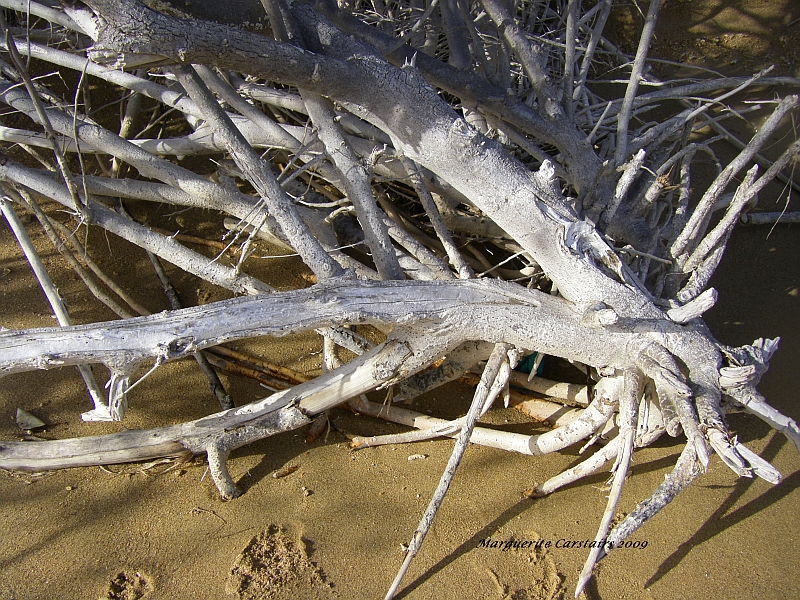
The tide comes in right up to the edge, and you can see where erosion is taking place.
The shore is now edged with trees that have fallen, and there are many roots visible as the sand gets washed away.
There are plans for rehabilitating the beach, and they do need to start soon, as already the line of bach has enroached into the line of land.

There is a caravan park right on the beach, and I have plans to stay there when i need somewhere to stay. It looks awesome.
Right now its the school holidays and there are tents almost on the beach. Its a beautiful location for a Caravan Park.


Thursday, September 10, 2009

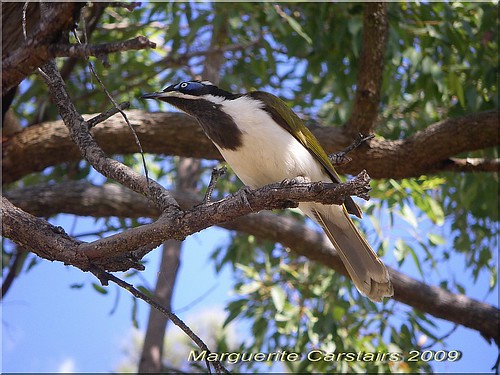
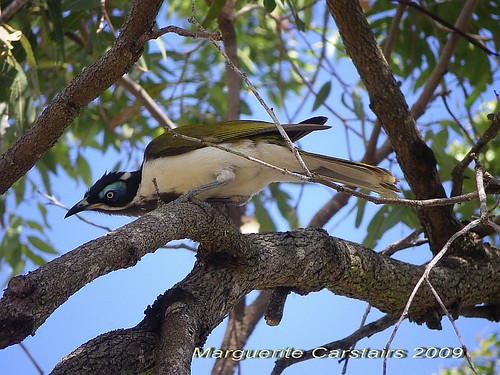
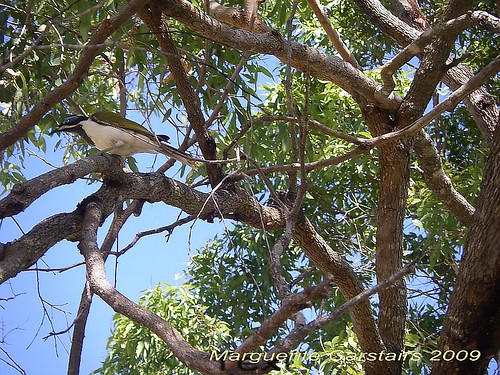
Honey Eaters..Lewin's Honeyeater ( Meliphaga lewinii )

On the Edge

Curiosity

Honeyeaters are a diverse group of Australian birds belonging to the family Meliphagidae. One of their special characteristics is a 'brush-tipped' tongue, with which they take up nectar from flowers. However, nectar is only one of their foods. Most honeyeaters also eat insects, and some eat more insects than nectar. Many honeyeaters also feed on pollen, berries and sugary exudates (e.g. sap) of plants as well as the sugary secretions of plant bugs (e.g. psyllids).

The Lewin's Honeyeater is small to medium in size. It is dark greenish grey in colour, with a creamy yellow gape (fleshy corners of the mouth). It has large, yellowish crescent-shaped ear patches. In flight, the pale yellow edges of the flight feathers can be seen. The bill is black and the eye is blue-grey. Both sexes are similar in appearance. Young Lewin's Honeyeaters are similar to the adults, but have brown eyes.
Lewin's Honeyeaters feed mostly on fruits, favouring berries and small fruits, but also eat insects and nectar. Birds are normally seen alone, but may form loose groups of up to 10 birds. They feed in the upper branches and on the trunks of trees. Some insects are caught in flight.


The tip of Lewin's Honeyeater's tongue is divided into 4 tiny sections like a paintbrush that lets it  lap up large quantities of nectar.

Listen to its call     http://www.birdsinbackyards.net/images/audio/meliphaga-lewinii.mp3


Ready to Fly

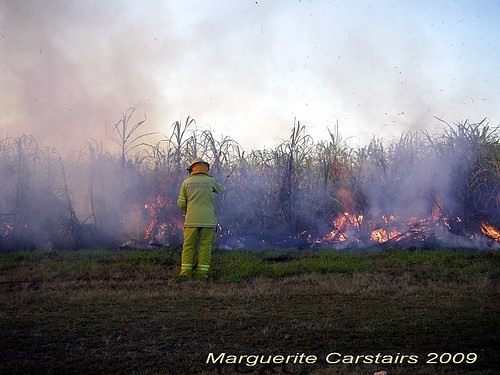
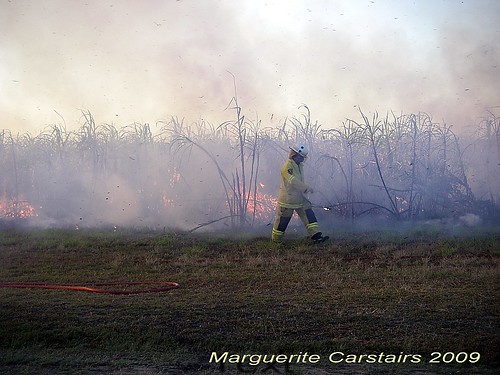
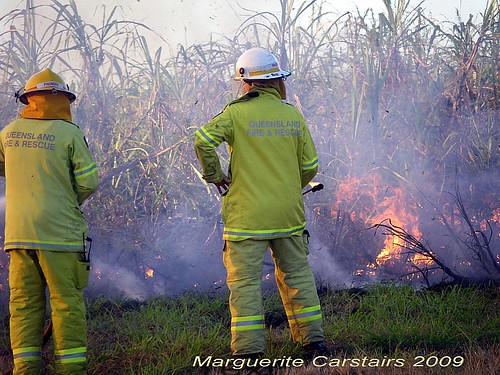
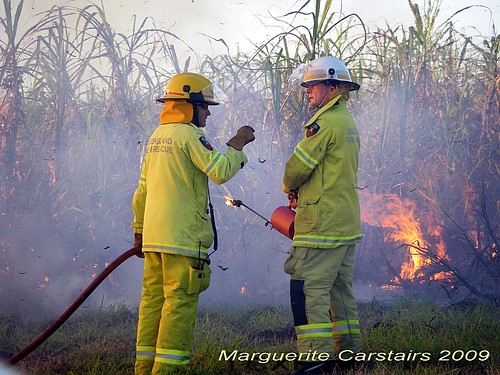
Sugar Cane Burning


Burning

Cane Fires

Sugar Cane grows at Hervey Bay, and Maryborough has a huge Sugar Refinery.
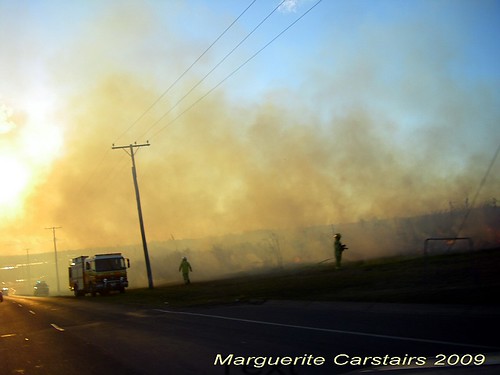
Now the cane is ready and it is burnt.
I was driving when I saw the smoke and smelt the sugary scent of the burning cane.
The Fire Resue was in attendance and so were many people with cameras watching the cane burn.
This morning a truck was taking away the cane in a swirl of dust.

The first settlement of Hervey Bay occurred in the 1850s. Hervey Bay was originally part of a cattle station, the Toogoom Run, which was settled in 1854. The first permanent white settler at Hervey Bay was Boyle Martin who, with his wife and child, arrived in 1863. He worked cutting timber and it is suggested that he was the first person to grow sugar cane in the area. By 1859 the first subdivision of land around Hervey Bay took place.
By the 1920’s the area had established strong growth in its primary industries of sugar cane, citrus fruits, beef and fishing.

Sugarcane, or sugar cane, is any of six to thirty-seven species  of tall perennial grasses of the genus, Saccharum, (family Poaceae, tribe Andropogoneae). Native to warm temperate to tropical regions of Asia, they have stout, jointed, fibrous stalks that are rich in sugar and measure two to six meters (six to nineteen feet) tall. All sugar cane species interbreed, and the major commercial cultivars are complex hybrids.
Burning cane in preparation for harvest continues to be an integral and essential part of farming operations for the majority of cane growers.
Under the Queensland Fire and Rescue Service Act 1990, special provisions apply to the burning of sugarcane, tops and trash in those situations where a grower's Cane Production Area (CPA) is bordered on every side by other cane land.

Fire Fighter

Watching the Fire

In Consultation


Boat Club at Hervey Bay

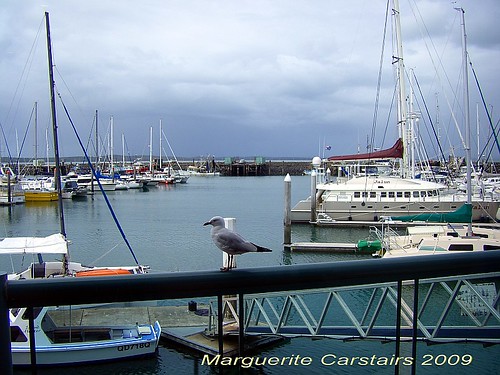
View from the Boat Club

Seagull View

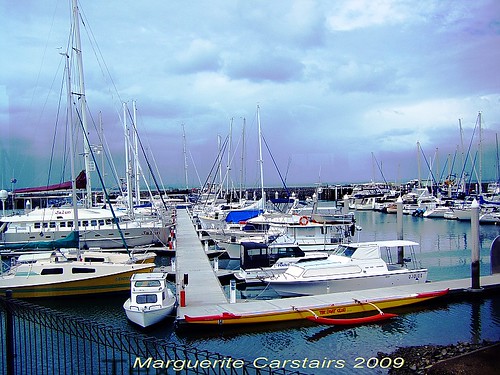
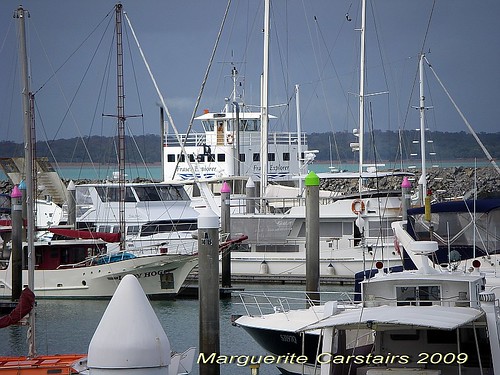
Yachts at Hervey Bay Boat Club

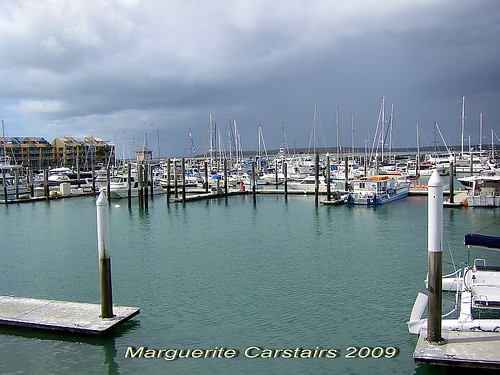
The Boat Club is situated at Urungan right at the end of the Coast.
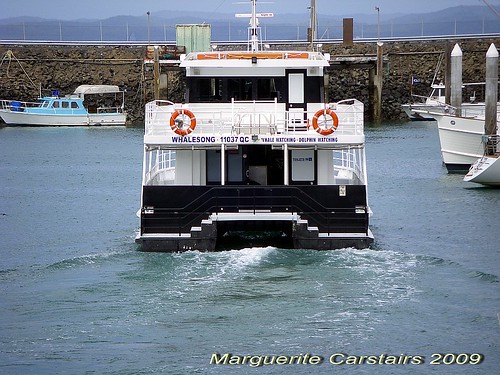
From this point the ferries and Tour boats leave for whale watching and to Fraser Island.
You can sit on the open verandah of The Boat Club and watch the tour boats leave in the morning and return at midday and in the evening.
The boat Club has a fantastic restaurant and Bistro Bar with daily Music and entertainment, and you can relax and listen to the Music or dance on the popular dance floor.

The Hervey Bay Boat Club provides a complete entertainment venue with a la carte dining, coffee shop, bars, free live entertainment, 180 of the latest poker machines, TAB and Keno, wedding reception and function facilities plus a limited hours child care centre and courtesy bus.

Visitors are always welcome at The Boat Club, Down By The Marina
http://www.boatclub.com.au/
 
 
Whalesong

Boat Harbour Hervey Bay

Trees on the Coast

Overhead

Hervey Bay must have the best trees I have ever seen, along the coast of the Bay.
Yet recently on the news someone wants the trees cleared for a better view of the water.

There is a bike and walking track from one end of the coast to the other and its along a very picturesque drive of Trees of great heights. They are very beautiful.
There are caravan parks situated right on the coast, and picnic areas and viewing spots. Its a very pleasant place to walk and enjoy the beauty of the Bay.
The road runs along the walking track, and its full of small shops and apartments. Its a very popular place for tourists who come for the whale watching and for fishing as well as the beauty of the Bay.

Eucalyptus  is a diverse genus of flowering trees (and a few shrubs) in the myrtle family, Myrtaceae. Members of the genus dominate the tree flora of Australia. There are more than 700 species of Eucalyptus, mostly native to Australia, and a very small number are found in adjacent parts of New Guinea and Indonesia and one as far north as the Philippines islands. Only 15 species occur outside Australia, and only 9 do not occur in Australia. Species of Eucalyptus are cultivated throughout the tropics and subtropics including the Americas, England, Africa, the Mediterranean Basin, the Middle East, China and the Indian Subcontinent.
Eucalyptus is one of three similar genera that are commonly referred to as "eucalypts," the others being Corymbia and Angophora. Many, but far from all, are known as gum trees because many species exude copious sap from any break in the bark (e.g. Scribbly Gum). The name eucalyptus comes from the Greek: εὐκάλυπτος, eukályptos, meaning "well covered".
The most readily recognisable characteristics of Eucalyptus species are the distinctive flowers and fruit (capsules or "gumnuts"). Flowers have numerous fluffy stamens which may be white, cream, yellow, pink or red; in bud, the stamens are enclosed in a cap known as an operculum which is composed of the fused sepals or petals or both. Thus flowers have no petals, but instead decorate themselves with the many showy stamens. As the stamens expand, the operculum is forced off, splitting away from the cup-like base of the flower; this is one of the features that unites the genus. The name Eucalyptus, from the Greek words eu-, well, and kaluptos, cover, meaning "well-covered", describes the operculum. The woody fruits or capsules are roughly cone-shaped and have valves at the end which open to release the seeds. Most species do not flower until adult foliage starts to appear; Eucalyptus cinerea and Eucalyptus perriniana are notable exceptions.
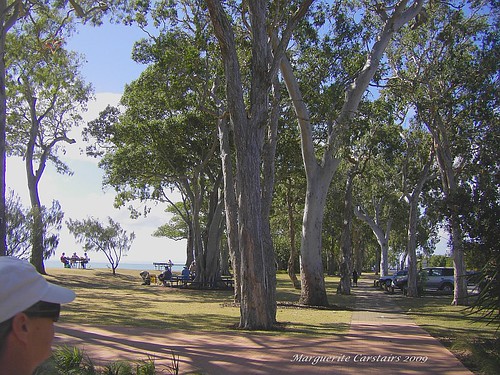
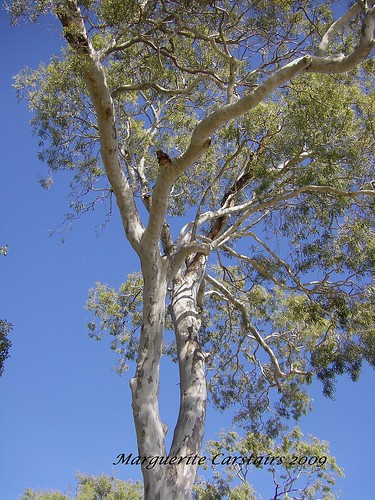
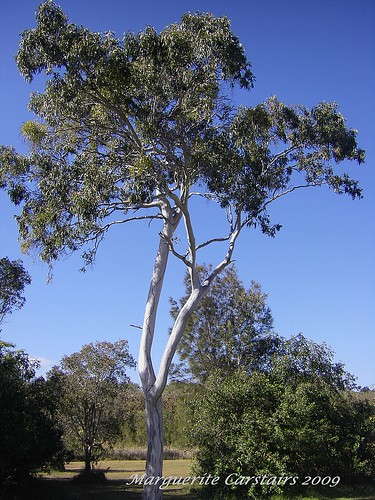
Foreshore Urangun

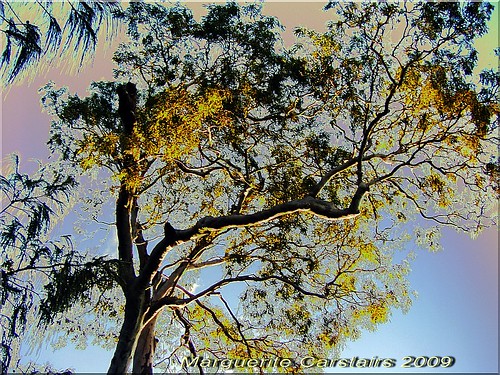
white Gum

Gum

Saturday, September 5, 2009

Cobwebs


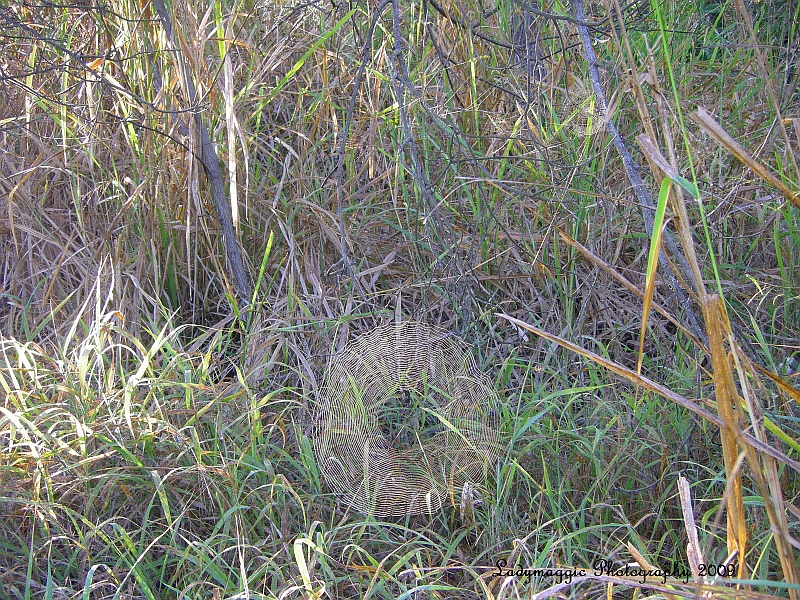
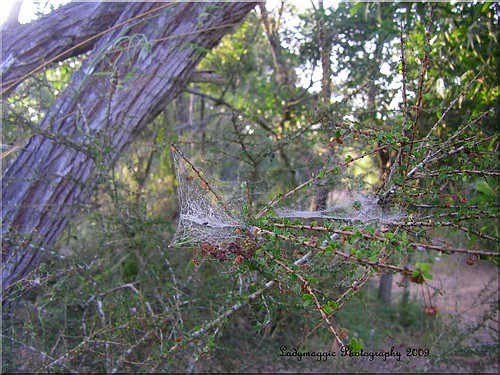
Every morning when I walk the dogs somewhere between 6am and 7am, the bush block and Natural Park is an exhibition of Spider webs of all shapes, sizes and forms.
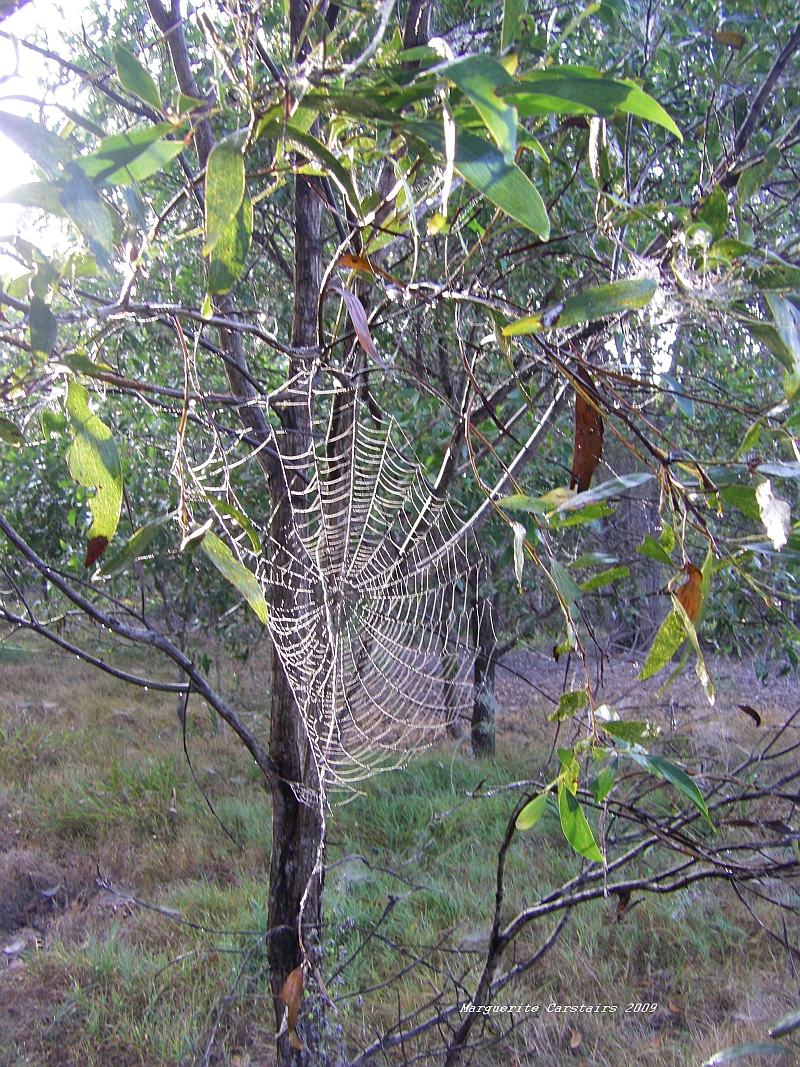
Some are between the branches as good spider webs are, and others are intricately spun in some amazing places in between the trees. Some trees are popular and have many webs. They look like a market stall with their wares hung out for display.
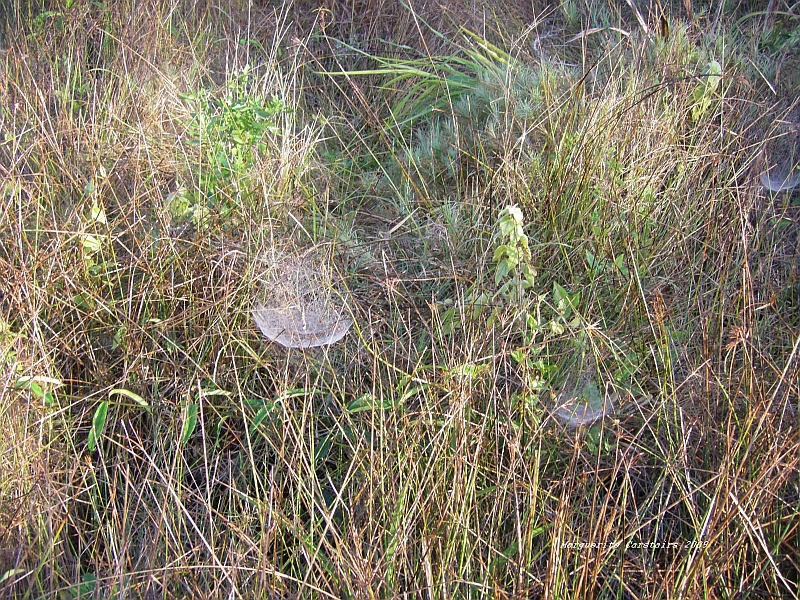
There is one spot where the grasses are a mass of spider webs.
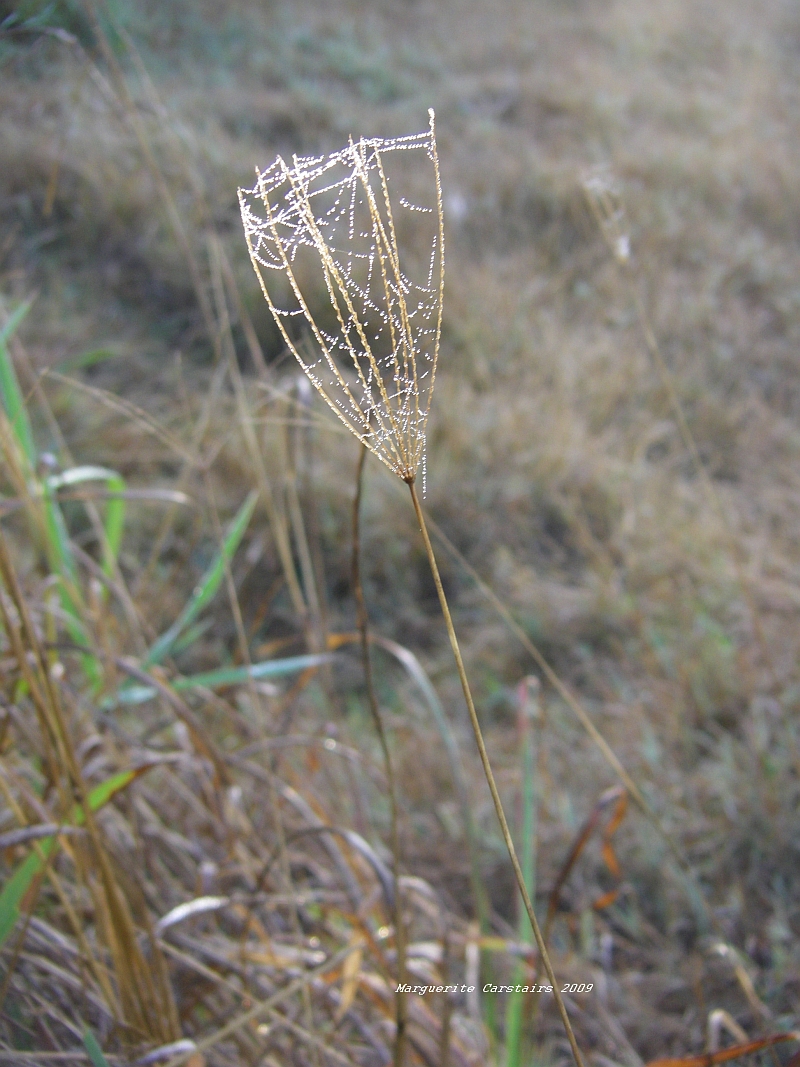
Even the tiny grass florettes can host a tiny web.

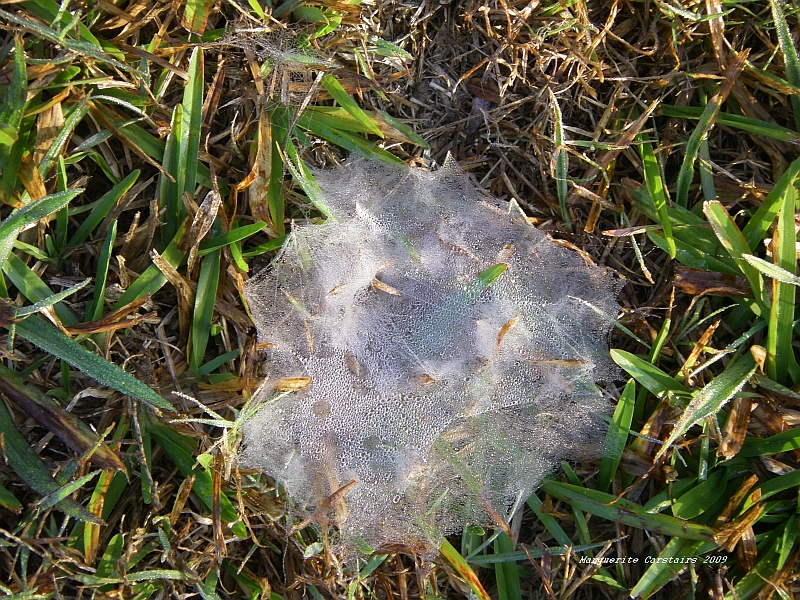
When it is damp, then the webs are dotted with miniature diamonds.

This morning it was slightly misty, and there were many webs out there. The dogs got quite impatient with me standing attached to the camera peering at one spot. They had no idea what was entrancing me as there was no movement.

Along the grass beside some trees in a couple of locations there seems to be spiders that live in the ground, and the grass is dotted with these very intricately woven small webs smaller than the rim of a cup.

Yesterday is rained. It is amazing that these flimsy webs handle the weight of the wet and the water and the heavy dews. They are each perfect and so diligently created in the night for viewing in the morning.
Within a few hours of daylight, they all disappear, and appear again next day.
I walk the dogs again around 11 or later, and the webs have all gone, and there is not one in sight.

Its amazing isn't it?

My new hobby...web hunting. I got some beautiful webs this morning.
I shall share some I took earlier in the week in this posting.


Networked Blogs

Followers