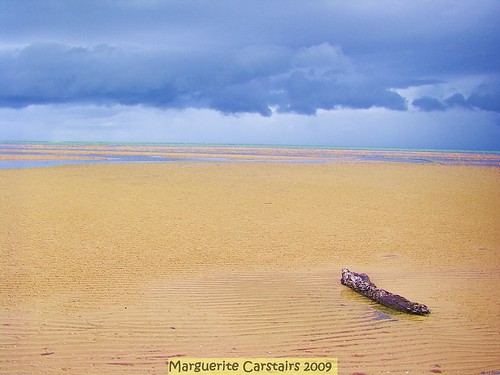
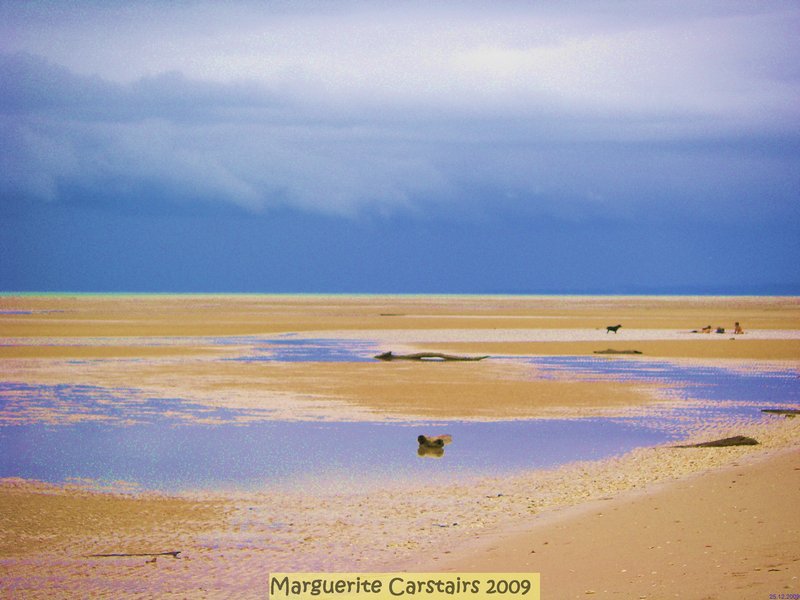
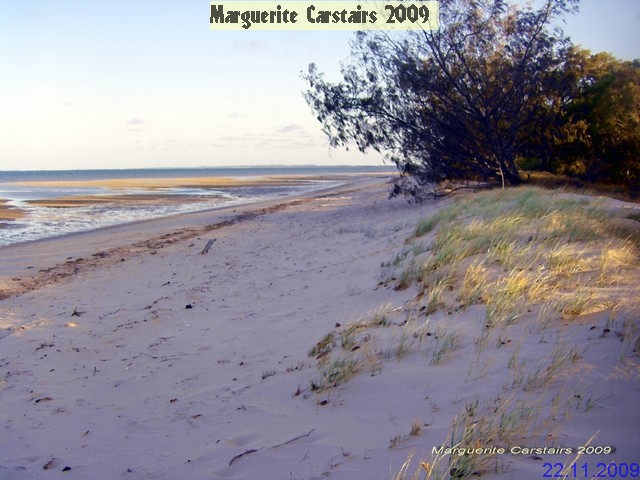
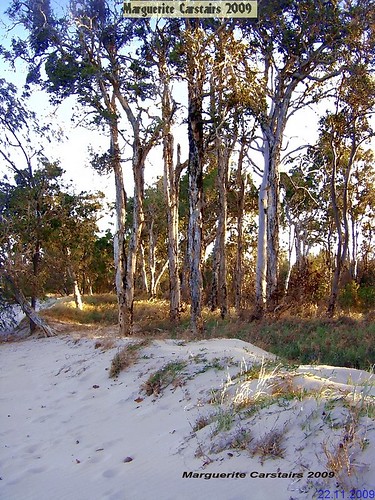
The tides and the winds are wearing away the Beach.
There has been talk of a Reclamation Project to protect the coastline that is slowly wearing down with time and weather.
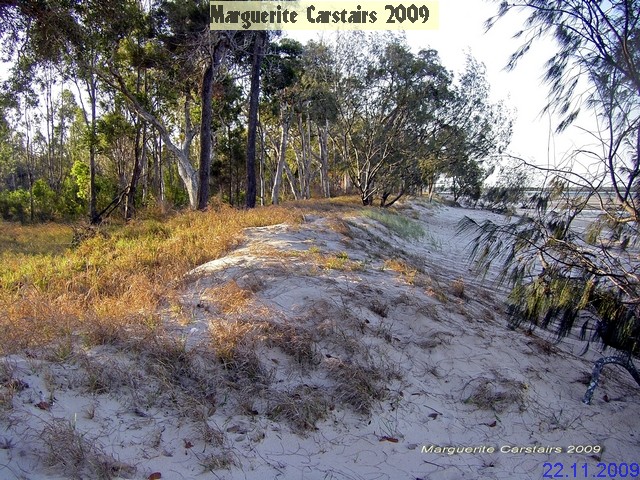
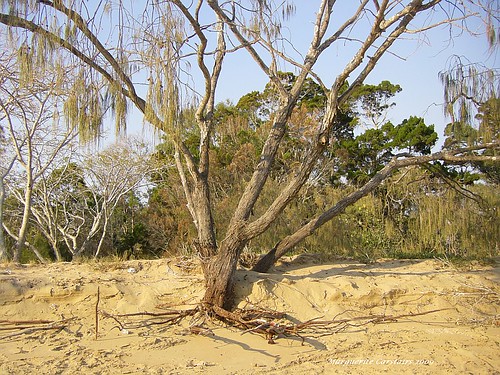
Here the root system of the tree is entirely exposed.
Soon it will fall down and become another victim to the erosion like the others lining the shores.
http://www.epa.qld.gov.au/register/p01670aa.pdf
Sea erosion is a natural phenomenon of beaches. Beaches respond to environmental factors such as annual variations in the amount of sand washed down from rivers, changes in the geometry of river delta channels, and changes in the weather, especially prevailing winds, severe storms and tropical cyclones. The “active beach system” extends from well back in the dune system to seaward of the intertidal zone. As environmental conditions change, the beach profile changes as sand is moved onshore or offshore seeking an equilibrium profile. The movement of sand may appear as beach erosion, dune build-up or the formation of nearshore sand bars. These changes are commonly temporary, as the beach never achieves a stable profile, due to ever-changing environmental conditions. However, in some cases there may be a trend of ongoing erosion, resulting in long-term shoreline recession
Sea erosion can be classified as either long-term or short-term, depending on the time scale over which it occurs. Long-term erosion usually refers to a trend of erosion extending over several years and can be caused by a deficit in the annual sediment budget or in the longshore transport rates along the beach. Such erosion can occur without any reduction in the value of the beach natural system or as a public asset, as the beach profile is not changed but merely shifted landwards.
Short-term erosion refers to erosion that occurs over a period of days, rather than years, as a result of extreme weather events such as severe storm or cyclone activity. Short-term erosion results in changes to the profile of the beach. During short-term erosion events, the main sand transport mechanisms occur offshore. After the storm passes, normal beach processes usually produce onshore sand transport that restores the beach naturally. This natural restoration process may take many months or years. In most cases, intervention to restore the beach to its former condition is not required.

 Posts
Posts



140x45.jpg)


