Showing posts with label sand bank. Show all posts

Sunday, January 3, 2010

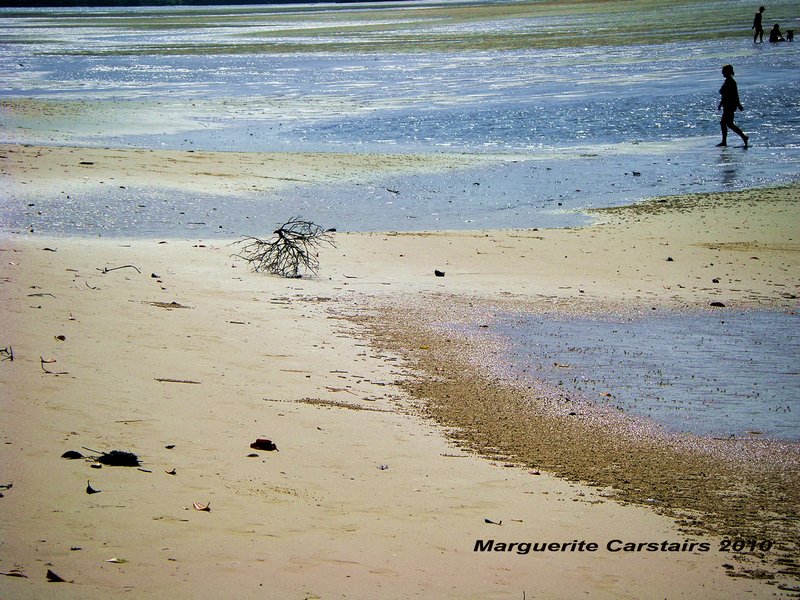
Sandbanks at Low tide left of Burrum Heads


Sandbanks at Low tide, originally uploaded by Ladymaggic.
I saw that at Low tide, the sandbanks were not far from the mooring of the yacht I was staying on, so I decided to walk back across the sandbanks.
This is Burrum Heads from the sand banks as I walked back.
The time was 15.00 and the tide was receding. Low tide was at 17.15.
There were a few people yabbying for bait, and the sand was very soft and spongy underfoot. It took maybe 20 minutes to walk back from the edge of the sandbank back to Burrum Heads.
There are very few shells on the sand, and soldier crabs dived for cover as I walked past.
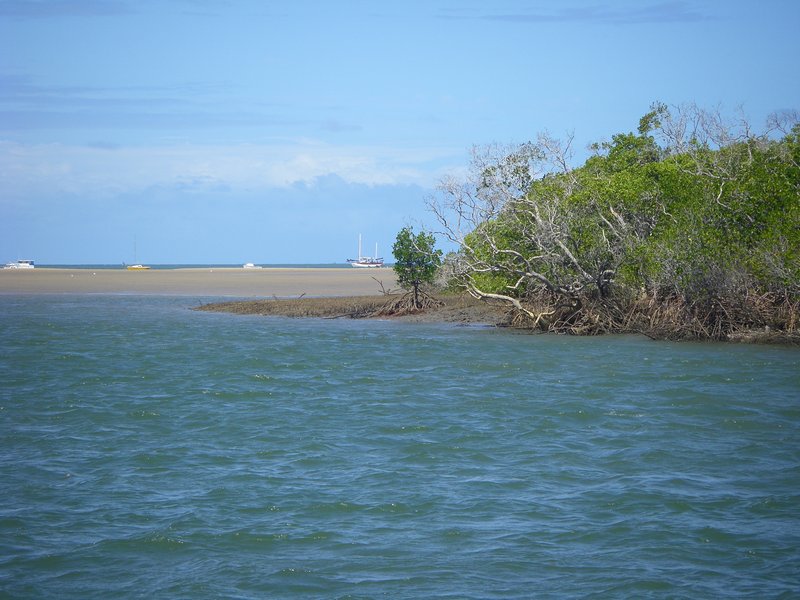

Low tide was at 5pm...I waited until the sandbank appeared as this was close to the yacht.
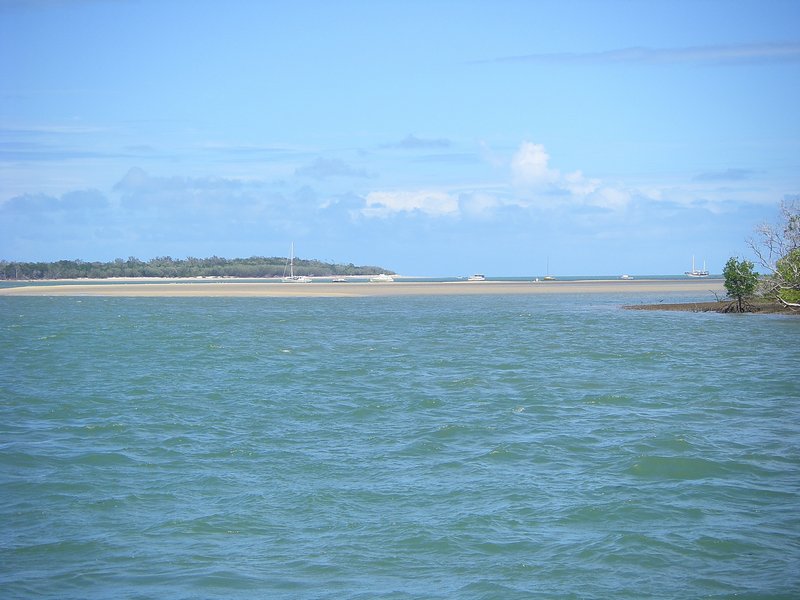


I get a ride in the dinghy to the sandbank and carrying my fishing rod, bag and laptop, I walk across the sandbank back to Burrum Heads.
The sand was very soft underfoot, and there were many tidal pools as the tide was still receding.
It was very hot in the afternoon sun.
The walk back took about 20 minutes...I waded through the many shallow tide pools.

There were very few shells on the sand, and hardly any weed in this area, but many tiny soldier crabs scuttled for cover as I disturbed them, and they immediately dug back into the soft sand.

Tuesday, October 13, 2009

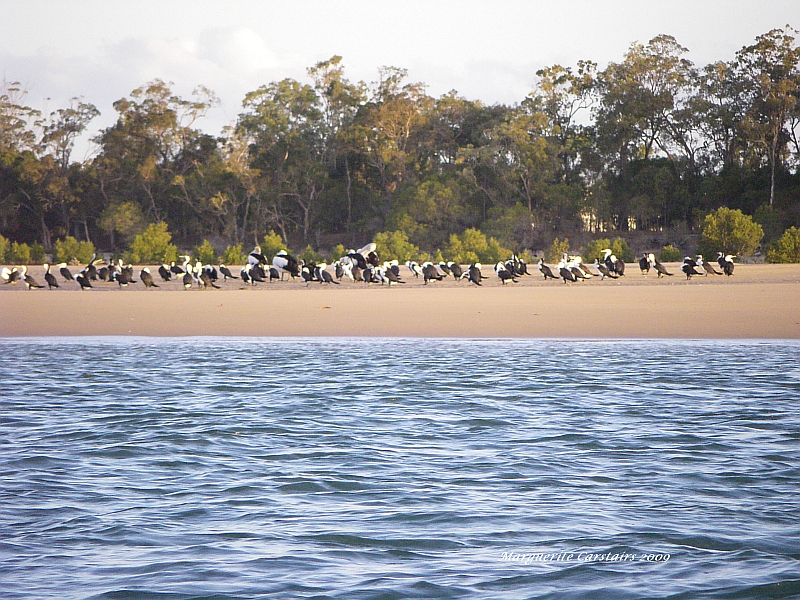
Comorants and the Mangroves of Burrum Heads


Low Tide on the River, originally uploaded by Ladymaggic.
Comorants live in the Mangroves along the River
So do Pelicans and other birds.
Burrum Heads is a Protected Water Sanctuary for Birds and the Mangroves


Mangroves are trees and shrubs that grow in saline coastal habitats in the tropics and subtropics – mainly between latitudes 25° N and 25° S. The saline conditions tolerated by various species range from brackish water, through pure seawater (30 to 40 ppt), to water of over twice the salinity of ocean seawater, where the salt has become concentrated by evaporation (up to 90 ppt).[1][2]

The many species of trees and shrubs adapted to saline conditions are not all closely related, and the term "mangrove" may be used for all of them, or more narrowly only for the mangrove family of plants, the Rhizophoraceae, or even more specifically just for mangrove trees of the genus Rhizophora

Mangroves form a characteristic saline woodland or shrubland habitat, called mangrove swamp, mangrove forest, mangrove or mangal.[3] Mangals are found in depositional coastal environments where fine sediments (often with high organic content) collect in areas protected from high energy wave action. They occur both in estuaries and along open coastlines. Mangroves dominate three quarters of tropical coastlines


Networked Blogs

Followers