Showing posts with label wild birds. Show all posts

Saturday, November 28, 2009

Kookaburra Sings at Dawn


Kookaburra Sings, originally uploaded by Ladymaggic.
There are many Kookaburras in the trees.

Laughing Kookaburra
Scientific name: Dacelo novaeguineae
Family: Halcyonidae
Order: Coraciiformes

The Laughing Kookaburra is instantly recognizable in both plumage and voice. It is generally off-white below, faintly barred with dark brown, and brown on the back and wings. The tail is more rufous, broadly barred with black. There is a conspicuous dark brown eye-stripe through the face. It is one of the larger members of the kingfisher family.

Laughing Kookaburras feed mostly on insects, worms and crustaceans, although small snakes, mammals, frogs and birds may also be eaten. Prey is seized by pouncing from a suitable perch. Small prey is eaten whole, but larger prey is killed by bashing it against the ground or tree branch.

Laughing Kookaburras are believed to pair for life. The nest is a bare chamber in a naturally occurring tree hollow or in a burrow excavated in an arboreal (tree-dwelling) termite mound. Both sexes share the incubation duties and both care for the young. Other Laughing Kookaburras, usually offspring of the previous one to two years, act as 'helpers' during the breeding season. Every bird in the group shares all parenting duties

http://birdsinbackyards.net/bird/37

Listen to the sound that wakes me up at Dawn...and he is not singing...he is telling all about his territory and warning them off...

http://birdsinbackyards.net/images/audio/dacelo-novaeguineae.mp3


Rainbow Lorrikeet


Rainbow Lorrikeet, originally uploaded by Ladymaggic.
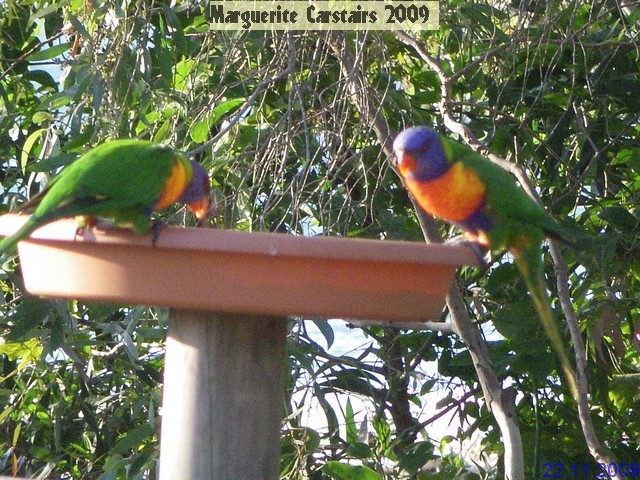
Sitting on the Fence at the Feeding Tray was a whole group of Rainbow Lorrikeets


Saturday, November 21, 2009

Rainbow Lorikeets on the fence


Parrots on the fence, originally uploaded by Ladymaggic.


There are many parrots that live around the coast where the nectar is rich in the grevilleas and gums.
You can see them swaying as they cling to the flowers.

At the caravan Park a feeder attracts the birds after the sunset and before they roost for the night

Rainbow Lorikeet
The Rainbow Lorikeet is unmistakable with its bright red beak and colourful plumage. Both sexes look alike, with a blue (mauve) head and belly, green wings, tail and back, and an orange/yellow breast. They are often seen in loud and fast-moving flocks, or in communal roosts at dusk.
The Rainbow Lorikeet mostly forages on the flowers of shrubs or trees to harvest nectar and pollen, but also eats fruits, seeds and some insects.
The eggs of the Rainbow Lorikeet are laid on chewed, decayed wood, usually in a hollow limb of a eucalypt tree. Both sexes prepare the nest cavity and feed the young, but only the female incubates the eggs

Facts and figures
Research Species: Yes
Minimum size: 28 cm
Maximum size: 32 cm
Average size: 30 cm
Average weight: 133 g
Breeding season: June to January
Clutch size: 2
Incubation: 23 days
Time in nest: 45 days

http://www.birdsinbackyards.net/bird/97


Monday, November 16, 2009

Osprey Owls


owl, originally uploaded by Ladymaggic.
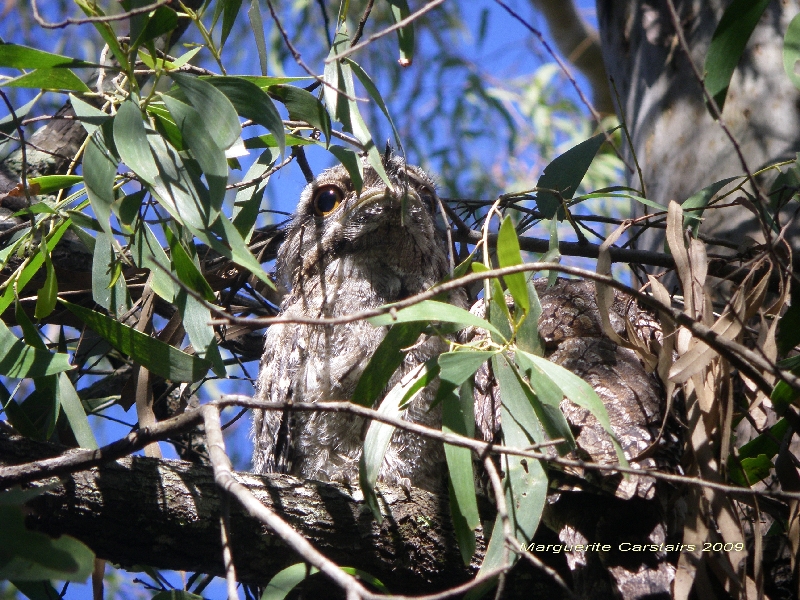
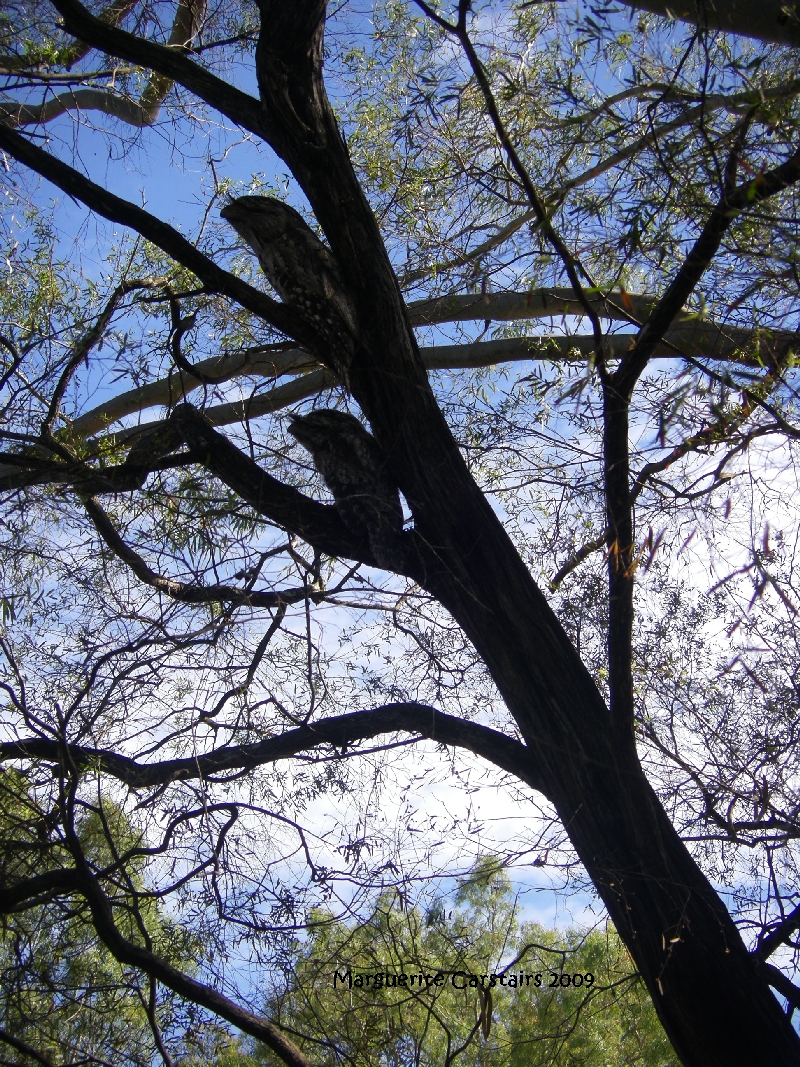
Owls are nocturnal and sleep all day..so seeing this family asleep at 7am was a real thrill.
They always use the same tree and have lived here for a while.
The adult birds were against the tree trunk looking like stumps, and the babies were amongst the leaves looking like some ruffled bark.


The baby Owls watched me from the shelter of the leaves


Networked Blogs

Followers