The Olive-backed Oriole is part of a worldwide family, of which Australia has two other members (the Yellow Oriole and the Figbird). Males and females have an olive-green head and back, grey wings and tail, and cream underparts, streaked with brown. They both have a bright red eye and reddish beak. Females can be distinguished from males by a paler bill, duller-green back, and an extension of the streaked underparts up to the chin.
The Olive-backed Oriole occurs across coastal regions of northern and eastern Australia from the Kimberley region in Western Australia, right around the east coast to Adelaide in South Australia.
The Olive-backed Oriole lives in forests, woodlands and rainforests, as well as well-treed urban areas, particularly parks and golf courses.
Sedentary in the north of its range, but appears to be a summer migrant to the more southern part of its range. Small groups undertake nomadic movements, following fruiting trees during the autumn and winter.
Olive-backed Orioles are less gregarious than Figbirds, with which they are often seen foraging. Although they are sometimes seen in small groups, particularly in autumn and winter, they more often occur alone or in pairs, feeding on insects and fruit in canopy trees. The female Olive-backed Oriole builds a cup-shaped nest which is attached by its rim to a horizontal fork on the outer-edge of the foliage of a tree or tall shrub. Nests are usually around 10 m above the ground, and built of strips of bark and grass, bound with spider web. The male does not build the nest, or incubate the eggs, but he feeds the young after the eggs hatch.
http://birdsinbackyards.net/species/Oriolus-sagittatus
Showing posts with label birds. Show all posts
Showing posts with label birds. Show all posts
Monday, August 2, 2010


Thursday, June 10, 2010
Honet Eaters in the Flowering Gums


Friday, February 12, 2010

Saturday, December 26, 2009
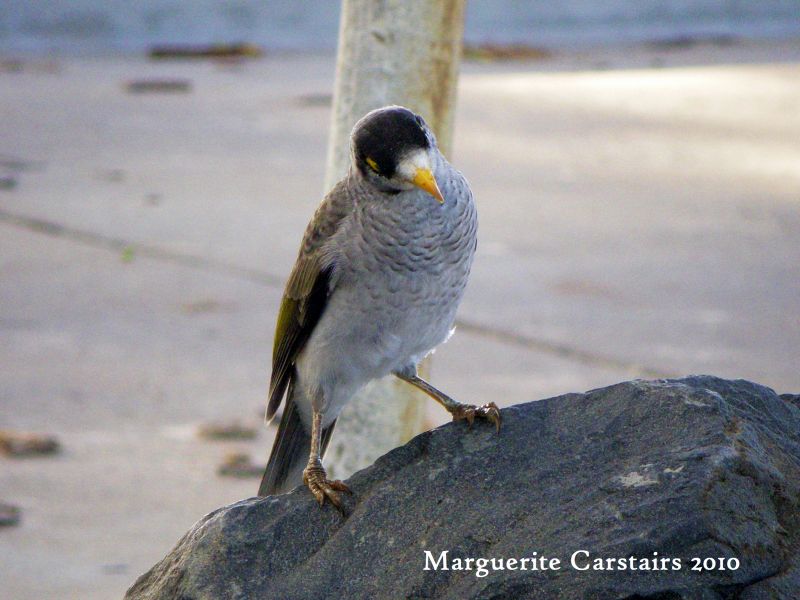
Taking off
They were standing on the waters edge.
I took some photos, then they took off just as I clicked this shot.
I thought I was very lucky to see their beautiful and strong wings at the point of take off.


I took some photos, then they took off just as I clicked this shot.
I thought I was very lucky to see their beautiful and strong wings at the point of take off.
Wednesday, December 16, 2009
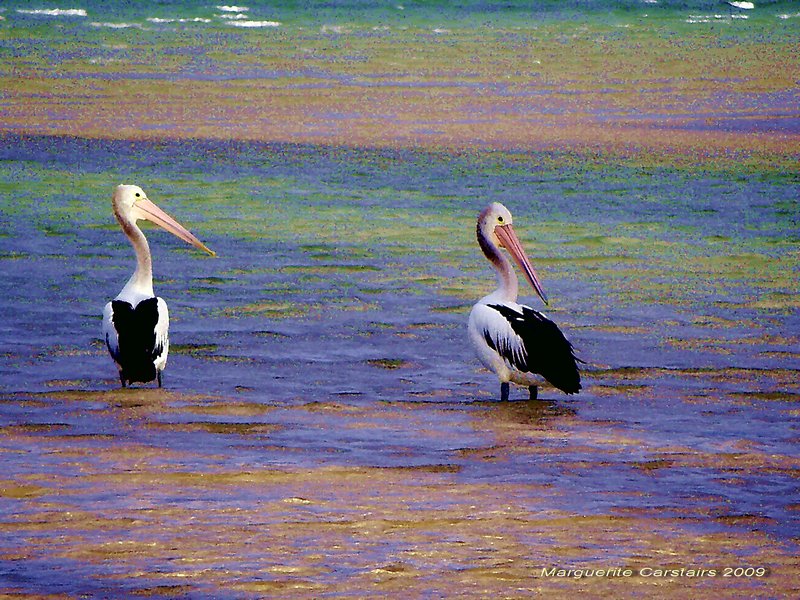
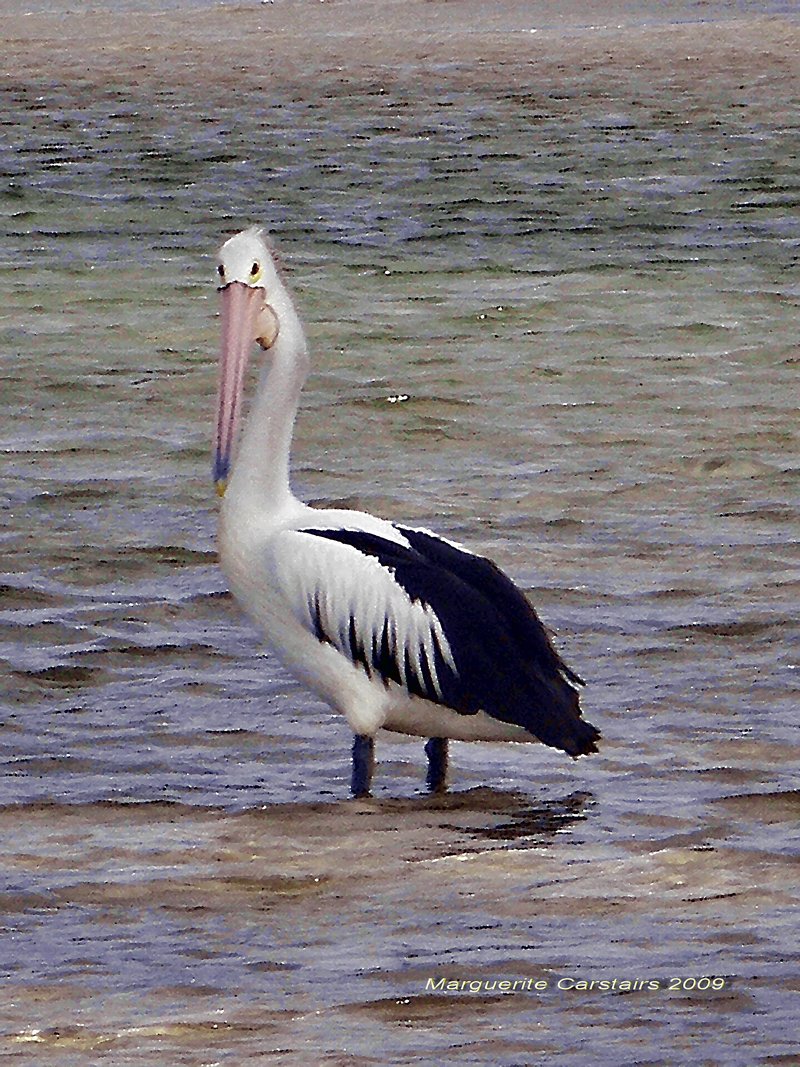
Pelican Burrum Heads Boat Ramp
This was an awesome experience
The day had been good for fishing, and five fish skeletons were left for the birds.
A pelican and a whole group of seagulls were on the shore after the fish.
I took many photos.
This is when the pelican walked to the shore, grabbed on of the fish and took it back out to sea to swallow it whole.
There are seven species of pelicans in the world, all of which are similar in shape and, with one exception, are primarily white in colour. Males are larger than females. The most characteristic feature of pelicans is the elongated bill with its massive throat pouch. The Australian Pelican's bill is 40 cm - 50 cm long and is larger in males than females. Pelicans have large wings and a wingspan of 2.3 m - 2.5 m.
Pelicans are highly mobile, searching out suitable areas of water and an adequate supply of food. Pelicans are not capable of sustained flapping flight, but can remain in the air for 24 hours, covering hundreds of kilometres. They are excellent soarers and can use thermals to rise to considerable altitudes. Flight at 1,000m is common, and heights of 3 000 m have been recorded. By moving from one thermal to the next, pelicans can travel long distances with a minimum of effort, reaching air speeds of up to 56 km/hour.
http://birdsinbackyards.net/bird/82


The day had been good for fishing, and five fish skeletons were left for the birds.
A pelican and a whole group of seagulls were on the shore after the fish.
I took many photos.
This is when the pelican walked to the shore, grabbed on of the fish and took it back out to sea to swallow it whole.
There are seven species of pelicans in the world, all of which are similar in shape and, with one exception, are primarily white in colour. Males are larger than females. The most characteristic feature of pelicans is the elongated bill with its massive throat pouch. The Australian Pelican's bill is 40 cm - 50 cm long and is larger in males than females. Pelicans have large wings and a wingspan of 2.3 m - 2.5 m.
Pelicans are highly mobile, searching out suitable areas of water and an adequate supply of food. Pelicans are not capable of sustained flapping flight, but can remain in the air for 24 hours, covering hundreds of kilometres. They are excellent soarers and can use thermals to rise to considerable altitudes. Flight at 1,000m is common, and heights of 3 000 m have been recorded. By moving from one thermal to the next, pelicans can travel long distances with a minimum of effort, reaching air speeds of up to 56 km/hour.
http://birdsinbackyards.net/bird/82
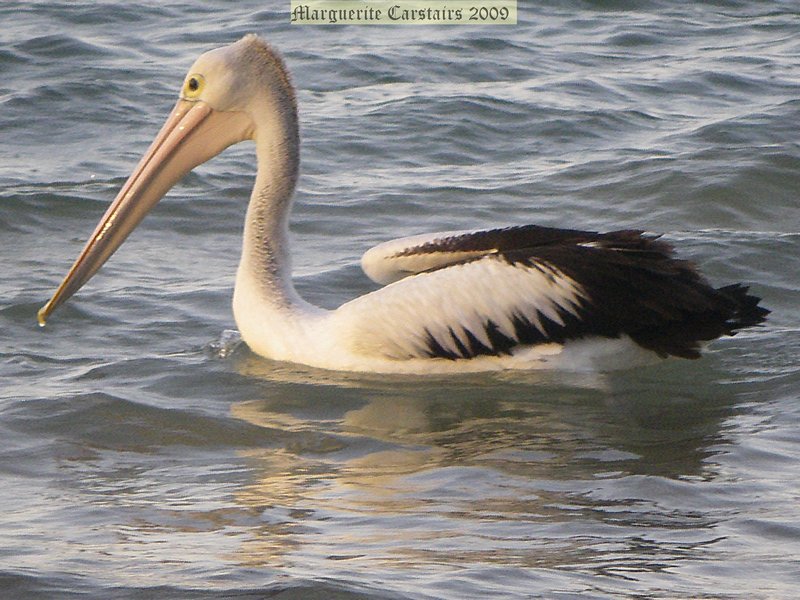
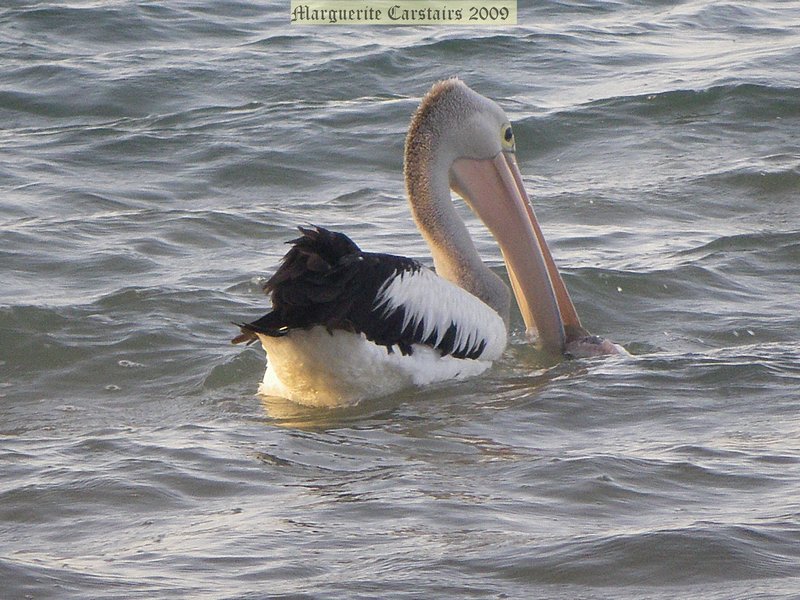
Pelican waiting for Fish
The pelican waits by the fishermen for a discarded fish...or the bait if he is fast enough
They are a good indication of fish being in the water as they come and wait for the fish to be caught

They are a good indication of fish being in the water as they come and wait for the fish to be caught
Sunday, December 6, 2009
Swallow on the Pier
There were many swallows flying around the pier.
A whole line of them posed for photos.
They are around the boats at Burrum Heads too


A whole line of them posed for photos.
They are around the boats at Burrum Heads too

Friday, December 4, 2009
Lorikeet Pair

Lorrikeet Pair, originally uploaded by Ladymaggic.
In the wild the natural diet of the scaly breasted lorikeet includes seeds, fruits, berries, pollen, nectar and flowers.
Rainbow lorikeets are found all along the eastern coast and the eastern half of the southern coast of Australia, the rainbow lorikeet is one of Australia's most brilliantly plumaged parrots. Mainly feeding on tree blossoms and some insects, they have readily adapted to introduced fruit crops. Preferring timbered areas and roosting in large noisy flocks at night, they set out to forage all day returning at night to the same roost. Breeding from August to January, the usual number of eggs is two. When the local food supply runs out, they may disappear overnight, having moved on to search for a more productive area.

Monday, November 23, 2009
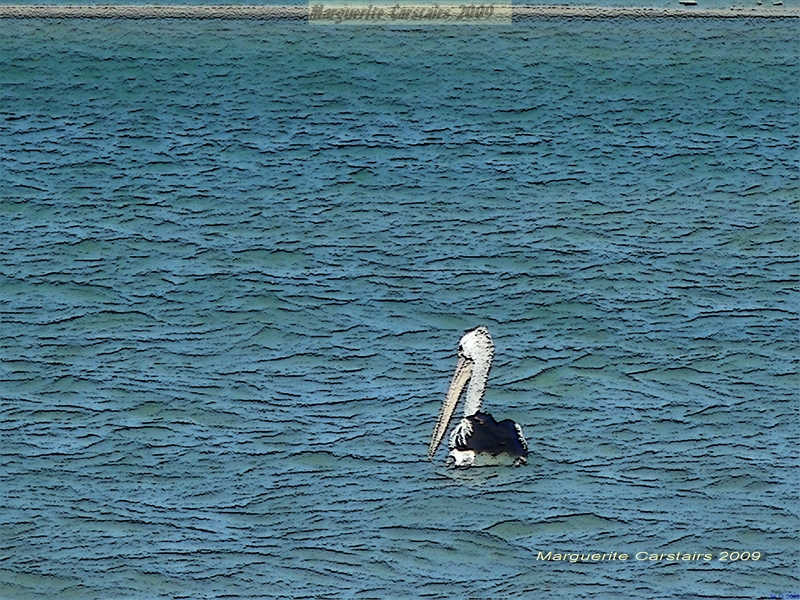
Pelican on the Shore
Pelicans are around.
Sometimes in large groups, but mostly in pairs
Scientific name: Pelecanus conspicillatus
Family: Pelecanidae
Order: Pelecaniformes
There are seven species of pelicans in the world, all of which are similar in shape and, with one exception, are primarily white in colour. Males are larger than females. The most characteristic feature of pelicans is the elongated bill with its massive throat pouch. The Australian Pelican's bill is 40 cm - 50 cm long and is larger in males than females. Pelicans have large wings and a wingspan of 2.3 m - 2.5 m.
Pelicans are highly mobile, searching out suitable areas of water and an adequate supply of food. Pelicans are not capable of sustained flapping flight, but can remain in the air for 24 hours, covering hundreds of kilometres. They are excellent soarers and can use thermals to rise to considerable altitudes. Flight at 1,000m is common, and heights of 3 000 m have been recorded. By moving from one thermal to the next, pelicans can travel long distances with a minimum of effort, reaching air speeds of up to 56 km/hour.
The bill and pouch of pelicans play an important role in feeding. The bill is sensitive and this helps locate fish in murky water. It also has a hook at the end of the upper mandible, probably for gripping slippery food items. When food is caught, the pelican manipulates it in its bill until the prey typically has its head pointing down the pelican's throat. Then with a jerk of the head the pelican swallows the prey. The bill is delicately built. The lower jaw consists of two thin and weakly articulated bones from which the pouch hangs. When fully extended, the bill can hold up to 13 liters. The pouch does not function as a place to hold food for any length of time. Instead it serves as a short-term collecting organ. Pelicans plunge their bills into the water, using their pouches as nets.
Once something is caught, a pelican draws its pouch to its breast. This empties the water and allows the bird to maneuver the prey into a swallowing position. The pouch can also serve as a net to catch food thrown by humans, and there are sightings of pelicans drinking by opening their bill to collect rainwater.
The Australian Pelican may feed alone, but more often feeds as a cooperative group. Sometimes these groups are quite large. One group numbered over 1,900 birds. A flock of pelicans works together, driving fish into a concentrated mass using their bills and sometimes by beating their wings. The fish are herded into shallow water or surrounded in ever decreasing circles.
Pelicans have an extremely light skeleton, weighing less than 10% of their total body weight.
Facts and figures
Minimum size: 160 cm
Maximum size: 180 cm
Average size: 170 cm
Breeding season: At any time of year
Clutch size: 1 to 3
Incubation: 35 days
Time in nest: 28 days
http://birdsinbackyards.net/bird/82


Sometimes in large groups, but mostly in pairs
Scientific name: Pelecanus conspicillatus
Family: Pelecanidae
Order: Pelecaniformes
There are seven species of pelicans in the world, all of which are similar in shape and, with one exception, are primarily white in colour. Males are larger than females. The most characteristic feature of pelicans is the elongated bill with its massive throat pouch. The Australian Pelican's bill is 40 cm - 50 cm long and is larger in males than females. Pelicans have large wings and a wingspan of 2.3 m - 2.5 m.
Pelicans are highly mobile, searching out suitable areas of water and an adequate supply of food. Pelicans are not capable of sustained flapping flight, but can remain in the air for 24 hours, covering hundreds of kilometres. They are excellent soarers and can use thermals to rise to considerable altitudes. Flight at 1,000m is common, and heights of 3 000 m have been recorded. By moving from one thermal to the next, pelicans can travel long distances with a minimum of effort, reaching air speeds of up to 56 km/hour.
The bill and pouch of pelicans play an important role in feeding. The bill is sensitive and this helps locate fish in murky water. It also has a hook at the end of the upper mandible, probably for gripping slippery food items. When food is caught, the pelican manipulates it in its bill until the prey typically has its head pointing down the pelican's throat. Then with a jerk of the head the pelican swallows the prey. The bill is delicately built. The lower jaw consists of two thin and weakly articulated bones from which the pouch hangs. When fully extended, the bill can hold up to 13 liters. The pouch does not function as a place to hold food for any length of time. Instead it serves as a short-term collecting organ. Pelicans plunge their bills into the water, using their pouches as nets.
Once something is caught, a pelican draws its pouch to its breast. This empties the water and allows the bird to maneuver the prey into a swallowing position. The pouch can also serve as a net to catch food thrown by humans, and there are sightings of pelicans drinking by opening their bill to collect rainwater.
The Australian Pelican may feed alone, but more often feeds as a cooperative group. Sometimes these groups are quite large. One group numbered over 1,900 birds. A flock of pelicans works together, driving fish into a concentrated mass using their bills and sometimes by beating their wings. The fish are herded into shallow water or surrounded in ever decreasing circles.
Pelicans have an extremely light skeleton, weighing less than 10% of their total body weight.
Facts and figures
Minimum size: 160 cm
Maximum size: 180 cm
Average size: 170 cm
Breeding season: At any time of year
Clutch size: 1 to 3
Incubation: 35 days
Time in nest: 28 days
http://birdsinbackyards.net/bird/82
Saturday, November 21, 2009
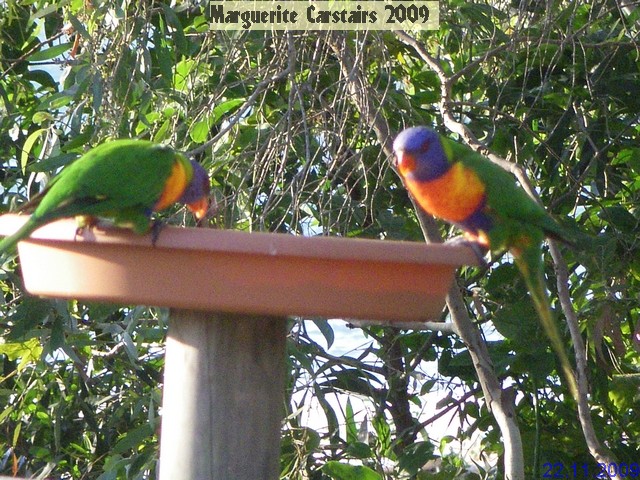
Rainbow Lorikeets on the fence
There are many parrots that live around the coast where the nectar is rich in the grevilleas and gums.
You can see them swaying as they cling to the flowers.
At the caravan Park a feeder attracts the birds after the sunset and before they roost for the night
Rainbow Lorikeet
The Rainbow Lorikeet is unmistakable with its bright red beak and colourful plumage. Both sexes look alike, with a blue (mauve) head and belly, green wings, tail and back, and an orange/yellow breast. They are often seen in loud and fast-moving flocks, or in communal roosts at dusk.
The Rainbow Lorikeet mostly forages on the flowers of shrubs or trees to harvest nectar and pollen, but also eats fruits, seeds and some insects.
The eggs of the Rainbow Lorikeet are laid on chewed, decayed wood, usually in a hollow limb of a eucalypt tree. Both sexes prepare the nest cavity and feed the young, but only the female incubates the eggs
Facts and figures
Research Species: Yes
Minimum size: 28 cm
Maximum size: 32 cm
Average size: 30 cm
Average weight: 133 g
Breeding season: June to January
Clutch size: 2
Incubation: 23 days
Time in nest: 45 days
http://www.birdsinbackyards.net/bird/97


You can see them swaying as they cling to the flowers.
At the caravan Park a feeder attracts the birds after the sunset and before they roost for the night
Rainbow Lorikeet
The Rainbow Lorikeet is unmistakable with its bright red beak and colourful plumage. Both sexes look alike, with a blue (mauve) head and belly, green wings, tail and back, and an orange/yellow breast. They are often seen in loud and fast-moving flocks, or in communal roosts at dusk.
The Rainbow Lorikeet mostly forages on the flowers of shrubs or trees to harvest nectar and pollen, but also eats fruits, seeds and some insects.
The eggs of the Rainbow Lorikeet are laid on chewed, decayed wood, usually in a hollow limb of a eucalypt tree. Both sexes prepare the nest cavity and feed the young, but only the female incubates the eggs
Facts and figures
Research Species: Yes
Minimum size: 28 cm
Maximum size: 32 cm
Average size: 30 cm
Average weight: 133 g
Breeding season: June to January
Clutch size: 2
Incubation: 23 days
Time in nest: 45 days
http://www.birdsinbackyards.net/bird/97
Monday, November 16, 2009
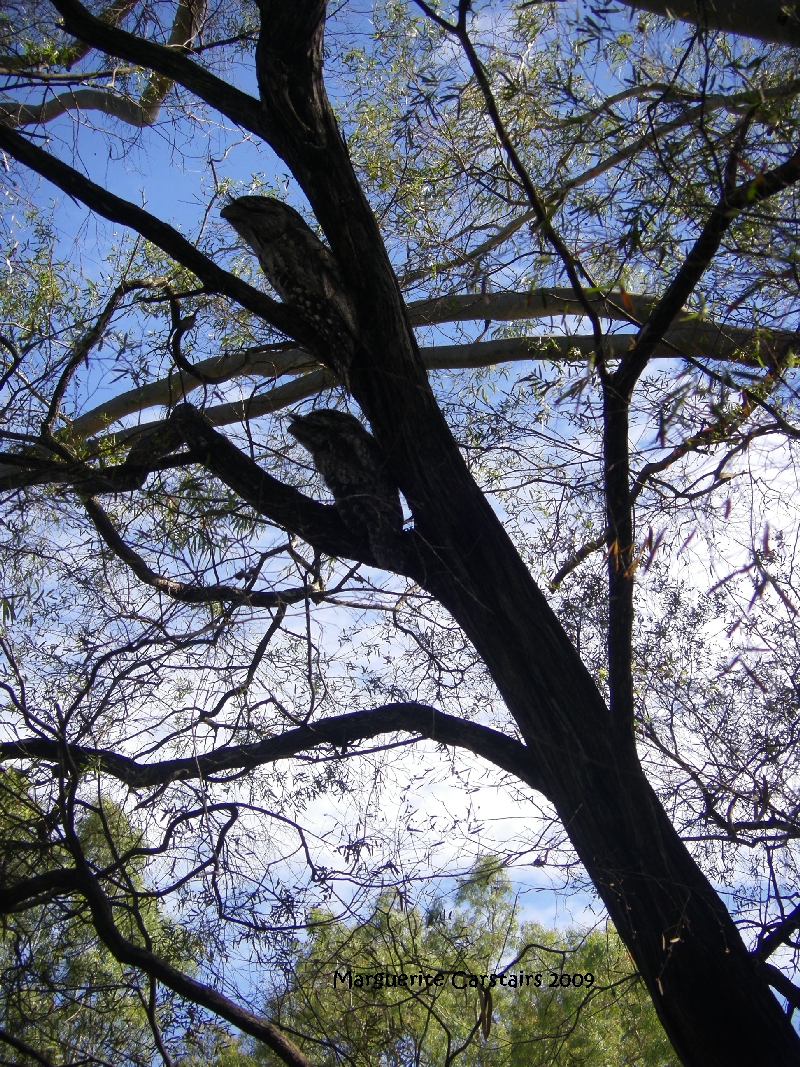
Osprey Owls
Owls are nocturnal and sleep all day..so seeing this family asleep at 7am was a real thrill.
They always use the same tree and have lived here for a while.
The adult birds were against the tree trunk looking like stumps, and the babies were amongst the leaves looking like some ruffled bark.


They always use the same tree and have lived here for a while.
The adult birds were against the tree trunk looking like stumps, and the babies were amongst the leaves looking like some ruffled bark.
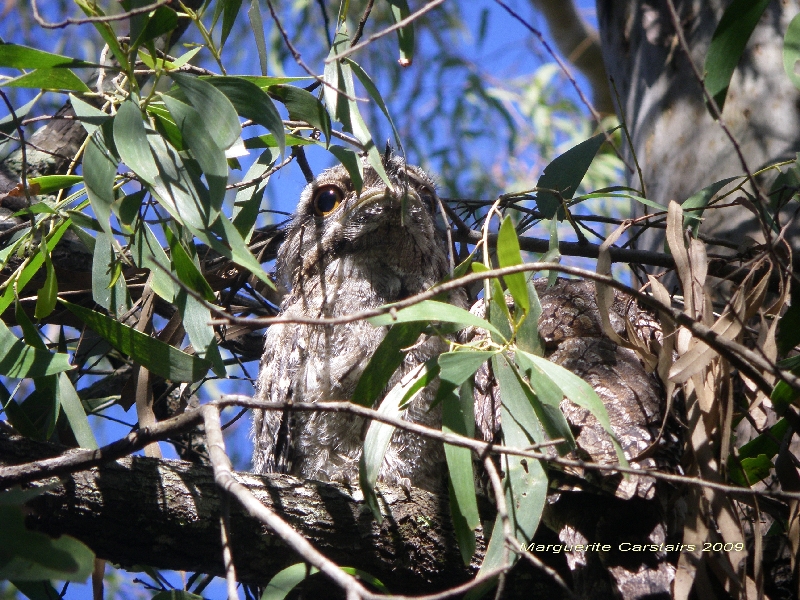
The baby Owls watched me from the shelter of the leaves
Thursday, September 10, 2009
Honey Eaters..Lewin's Honeyeater ( Meliphaga lewinii )


Honeyeaters are a diverse group of Australian birds belonging to the family Meliphagidae. One of their special characteristics is a 'brush-tipped' tongue, with which they take up nectar from flowers. However, nectar is only one of their foods. Most honeyeaters also eat insects, and some eat more insects than nectar. Many honeyeaters also feed on pollen, berries and sugary exudates (e.g. sap) of plants as well as the sugary secretions of plant bugs (e.g. psyllids).
The Lewin's Honeyeater is small to medium in size. It is dark greenish grey in colour, with a creamy yellow gape (fleshy corners of the mouth). It has large, yellowish crescent-shaped ear patches. In flight, the pale yellow edges of the flight feathers can be seen. The bill is black and the eye is blue-grey. Both sexes are similar in appearance. Young Lewin's Honeyeaters are similar to the adults, but have brown eyes.
Lewin's Honeyeaters feed mostly on fruits, favouring berries and small fruits, but also eat insects and nectar. Birds are normally seen alone, but may form loose groups of up to 10 birds. They feed in the upper branches and on the trunks of trees. Some insects are caught in flight.
The tip of Lewin's Honeyeater's tongue is divided into 4 tiny sections like a paintbrush that lets it lap up large quantities of nectar.
Listen to its call http://www.birdsinbackyards.net/images/audio/meliphaga-lewinii.mp3

Friday, September 4, 2009
Australian Ibis at North Stradbroke Island

Species:molucca
Genus:Threskiornis
Subfamily:Threskionithinae
Family:Threskiornithidae
Order:Ciconiiformes
Class:Aves
Phylum:Chordata
Kingdom:Animalia
The Ibis walk everywhere on the Island.
This old bird was across the road from the YHA at the park.
He was very tame, and was quite happy to let me take photographs.
Eventually he simply walked away into the bush across the road.
Preferred habitats include swamps, lagoons, floodplains and grasslands, but it has also become a successful inhabitant of urban parks and gardens.
The Australian White Ibis is identified by its almost entirely white body plumage and black head and neck. The head is featherless and its black bill is long and down-curved. During the breeding season the small patch of skin on the under-surface of the wing changes from dull pink to dark scarlet. Adult birds have a tuft of cream plumes on the base of the neck. Females differ from males by being slightly smaller, with shorter bills. Young birds are similar to adults, but have the neck covered with black feathers. In flight, flocks of Australian White Ibis form distinctive V-shaped flight patterns. Another common name for this bird is Sacred Ibis, but this more appropriately refers to a closely related African species.
http://www.birdsinbackyards.net/bird/85
Australian White Ibis nest in large colonies, often with the Straw-necked Ibis, T. spinicollis. The male secures a pairing territory on a branch of a tall tree in order to attract a female. The courtship ceremony involves the male putting on a noisy display, as well as showing aggression towards other males. When a female arrives, the male attracts her by bowing from his branch. He then offers the female a twig, forging a bond when she grasps it and they begin to preen one another. Once the pair bond is cemented, the birds fly off to build a nest at another location.

Birds of Surfers Paradise Beach


Birds on the Shore and Water


The seagulls walked along the edge of the foam seeking small fish and digging the sand for sand worms and shellfish.
The trees along the shore attracted honey eaters and the colorful parrots.
As you walked along the edge where the plants grew, the air was full of bird song.
The birds were quite tame and happy to coninue their business watched by my curious camera.
There were ibis everywhere. They were at the parking area of the Apartment, at the Gas Station where small gardens edged the corners, and walking the enclosed shorelines like patrolling Officers with a folder under their wing.
The birds were always busy, making mockery of indolent and unaware humans strolling past unemployed and apparently aimless. The birds were not on vacation at all. They were constantly and steadily hard at work all the time.
Subscribe to:
Posts (Atom)
About Me
140x45.jpg)
Networked Blogs

Subscribe To Coastal Art


 Posts
All Comments
Posts
All Comments